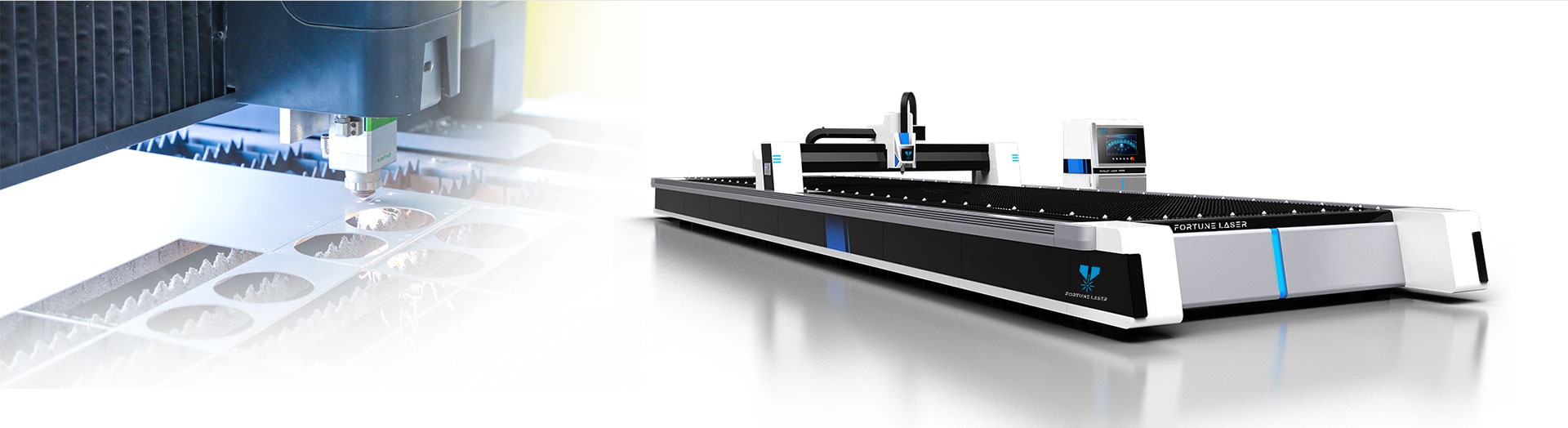


Restoration professionals face a difficult challenge. Historic fences require careful maintenance. However, traditional cleaning methods often damage the artifacts. Sandblasting erodes the surface. Chemical strippers leave toxic residues. Wrought iron fence restoration with laser offers a superior solution. This technology uses focused light. The light vaporizes rust. The process leaves the metal intact. This article explains the technical benefits of laser ablation. It also details the advantages of handheld laser welding.
The Material Challenge: True Wrought Iron vs. Mild Steel
Operators must identify the metal. Modern fences usually consist of mild steel. Mild steel possesses a uniform crystalline structure. It withstands aggressive cleaning.
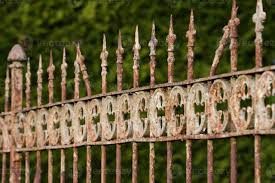
Historic fences often consist of true wrought iron. True wrought iron differs from steel. It is a composite material. It contains a soft iron matrix. It also contains iron silicate slag fibers. These slag fibers provide corrosion resistance. They create a wood-like grain.
Sandblasting damages this structure. Abrasive grit hits the surface. The grit erodes the soft iron. The grit exposes the slag fibers. This erosion creates deep pits. Pits trap moisture. Trapped moisture accelerates corrosion.
Laser cleaning protects the substrate. The laser beam targets the oxides. It reflects off the base metal. This selectivity preserves the slag fibers. It retains the original tooling marks. It maintains the historical integrity.
Laser Cleaning Technology: How Ablation Works
Laser cleaning uses a process called laser ablation. The machine emits high-intensity pulses of light.
1. The Physics of Removal
The laser source generates a beam. The beam hits the contaminant. Rust and paint absorb the energy. This absorption creates heat. The heat causes rapid thermal expansion. The contaminant vaporizes. It turns from a solid into a gas.
The underlying metal remains cool. The metal reflects the laser wavelength. This reflection prevents damage. The process is self-limiting. The cleaning stops at the bare metal surface.
2. Pulsed vs. Continuous Wave Lasers
Restoration projects use two laser types.
Pulsed Lasers (100W – 500W):
Mechanism: These lasers emit short pulses.
Action: The pulses create high peak power.
Benefit: They clean delicate surfaces. They preserve the patina. They prevent thermal buildup.
Continuous Wave (CW) Lasers (1000W – 3000W):
Mechanism: These lasers emit a continuous beam.
Action: The beam provides constant energy.
Benefit: They strip thick paint quickly. They clean heavy structural steel.
Risk: They input significant heat. Operators must move quickly. Slow movement warps thin parts.
3. Cleaning Complex Geometries
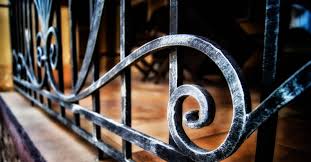
Wrought iron fences feature complex designs. They include scrolls, collars, and leaves.
Sandblasting Fails: Grit misses deep crevices. Grit lodges in tight joints.
Laser Succeeds: The laser acts on line-of-sight. The beam enters deep recesses. It vaporizes hidden rust. It cleans inside the “knuckles” of the fence. This capability prevents “rust jacking.”
Structural Repair: Handheld Laser Welding
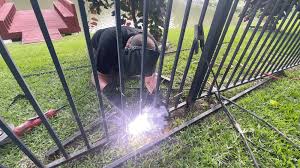
Restoration involves structural repair. Mechanical connections break over time. Traditional welding poses risks. Arc welding (MIG or TIG) generates high heat. High heat creates a large Heat Affected Zone (HAZ). A large HAZ causes warping.
Handheld laser welding solves this problem.
1. Precision and Low Heat
Laser welding concentrates energy. The beam melts a small area. This precision limits the HAZ. The surrounding metal stays cool. Operators can touch the part immediately. This feature protects delicate finials.
2. Wobble Welding Technology
Historic fences often have gaps. Broken parts fit poorly. A narrow laser beam cannot bridge these gaps.
The Technology: Laser welders use “wobble” heads.
The Mechanism: Mirrors oscillate the beam.
The Result: The beam creates a wider melt pool. It bridges gaps of 1.0 mm to 2.0 mm. It creates strong fillet welds.
3. Aesthetic Finish
Laser welds look smooth. They require minimal grinding. Traditional welding leaves slag. Grinding removes the original texture. Laser welding leaves the surface pristine.
Comparative Analysis: Laser vs. Traditional Methods
| Feature | Laser Cleaning | Abrasive Blasting | Chemical Stripping |
| Media Cost | Zero (Electricity only) | High (Sand/Grit) | High (Solvents) |
| Waste Disposal | Low (Captured dust) | High (Spent media) | High (Liquid hazmat) |
| Substrate Impact | Non-abrasive | Erosive (Pits surface) | Non-abrasive |
| Noise Level | Low (< 75 dB) | High (> 110 dB) | Low |
| Setup Time | Fast (Plug & Play) | Slow (Containment) | Slow (Dwell time) |
| Safety Risk | Eye injury (Class 4) | Inhalation / Injection | Chemical burns |
Analysis: Laser cleaning eliminates secondary waste. Sandblasting creates dust clouds. Laser cleaning creates manageable vapor. This reduction benefits urban job sites.
Operational Safety and Compliance
Laser cleaning systems utilize Class 4 lasers. This class represents a safety hazard. Operators must follow strict protocols.
1. Optical Safety
Laser light damages the eye. Direct beams burn the retina. Scattered light causes blindness.
The Rule: Personnel must wear safety glasses.
The Standard: Glasses must have an Optical Density (OD) of 7+.
The Setup: Operators must establish a Laser Controlled Area (LCA). They must use laser-safe curtains.
2. Fume Extraction
Ablation generates fumes. Paint vaporization releases toxins. Old fences often contain lead.
The Hazard: The plume contains lead particles. It contains Volatile Organic Compounds (VOCs).
The Solution: Operators use fume extractors. The extractors use HEPA filtration. The extractors capture the plume at the source.
3. Fire Prevention
The laser carries thermal energy. It ignites flammable materials.
The Protocol: Clear the area. Remove dry leaves. Wet the ground. Keep fire extinguishers nearby.
Surface Preparation Standards
Engineers specify cleanliness levels. Laser cleaning meets these standards.
SSPC-SP 1 (Solvent Cleaning): Lasers remove oils.
SSPC-SP 10 (Near-White Metal): Lasers remove 95% of rust.
Anchor Profile: Lasers create a micro-texture. They do not create a deep profile.
Coating Strategy: Use Direct-to-Metal (DTM) epoxy primers. These primers bond to laser-cleaned surfaces. They seal the metal effectively.
Conclusion
Wrought iron fence restoration with laser changes the industry. It replaces abrasion with ablation. It replaces force with precision.
Traditional methods prioritize speed. Laser methods prioritize preservation. Sandblasting destroys the slag interface. Laser cleaning preserves the slag interface. It maintains the original dimensions. It enables invisible repairs.
Contractors adopt this technology. They gain a competitive edge. They offer a cleaner service. They offer a safer service. They deliver superior results.
Frequently Asked Questions (FAQ)
Q: Can laser cleaning remove lead paint? A: Yes. The laser vaporizes lead paint. Operators must use fume extraction. The extractor captures the lead dust. This method prevents soil contamination.
Q: Does laser cleaning rust the metal? A: The laser removes oxides. The bare metal reacts with air. It will flash rust quickly. Operators must apply primer immediately.
Q: Is laser welding as strong as TIG welding? A: Yes. Laser welding creates full-penetration welds. The weld strength exceeds the base material. The small Heat Affected Zone retains structural integrity.
Q: Can I use a laser welder to clean rust? A: Yes. The machine must be a “3-in-1″ or “4-in-1″ model. Manufacturers design these units for interchangeability. The operator swaps the components. The operator removes the welding head. The operator installs the laser cleaning head. This hardware change modifies the beam focus. It allows the machine to ablate large areas.
Post time: Jan-28-2026