Laser selective cleaning is no longer a futuristic concept; in 2026, it is the cornerstone of Industry 5.0 surface preparation. For engineers and plant managers, the challenge has always been removing stubborn contaminants without damaging the critical substrate beneath. Traditional methods like sandblasting or chemical stripping are "dumb" tools—they apply force or acidity across the entire surface regardless of need.
By contrast, laser selective cleaning provides a "surgical" approach. It uses focused light to vaporize oxides, coatings, or grime with micron-level precision while leaving the base material—whether it is 304 stainless steel, aerospace-grade aluminum, or delicate historical marble—completely untouched.
What is Laser Selective Cleaning? (The Core Mechanism)
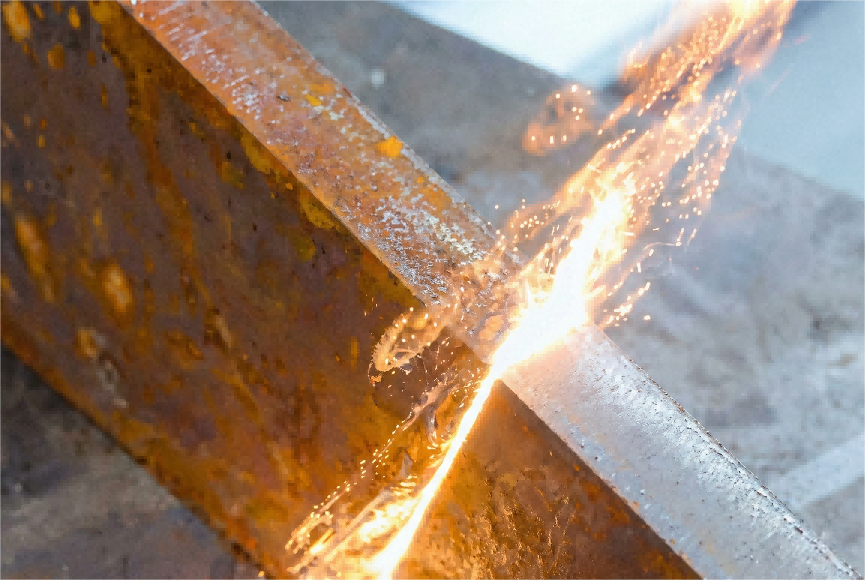
At its heart, this process relies on laser ablation. This occurs when a high-intensity laser beam strikes a surface, and the material absorbs the energy, turning it into plasma or gas.
Selective Photothermolysis
The "selective" part of the name comes from selective photothermolysis. Different materials absorb different wavelengths of light. By tuning the laser parameters, we can ensure the contaminant (like rust or black soot) absorbs the energy and vaporizes, while the substrate (the metal or stone) reflects the energy or remains below its thermal damage limit.
The Ablation Threshold
Success depends on the Ablation Threshold. Every material has a specific energy level at which it begins to vaporize.
-
Target: Keep energy density above the contaminant's threshold.
-
Protection: Keep energy density below the substrate's threshold.
This ensures a non-destructive, non-contact cleaning cycle that preserves the structural integrity of the part.
High-Stakes Applications: From Aerospace to Artifacts
1. Aerospace and Automotive
In high-precision manufacturing, "clean" isn't enough—it must be chemically pure. Laser cleaning is used for:
-
Edge Prep: Removing oxides before welding to ensure zero-defect joints.
-
Turbine Maintenance: Cleaning blades without inducing the thermal stress typical of mechanical grinding.
-
Bonding Prep: Increasing surface area for adhesives in electric vehicle (EV) battery packs.
2. Cultural Heritage
Nd:YAG (Neodymium-doped Yttrium Aluminum Garnet) lasers have revolutionized conservation. From Donatello's bronze statues to 5th-century Buddhist sculptures, lasers remove centuries of grime to reveal original gold leaf or pigment that would be destroyed by chemical solvents.
3. Microelectronics
Using "Steam Laser Cleaning," manufacturers can remove photoresist from silicon wafers. In 2026, this is vital for sub-10nm precision where even a single grain of dust can ruin a batch.
Laser Cleaning vs. Traditional Methods
| Feature | Laser Selective Cleaning | Sand/Media Blasting | Chemical Stripping |
| Contact | Non-contact | High-impact contact | Chemical reaction |
| Substrate Damage | Zero (if tuned) | Surface profiling/pitting | Potential etching/corrosion |
| Waste Stream | Fume extraction only | Tons of spent media | Hazardous liquid waste |
| Consumables | Electricity only | Sand, grit, dry ice | Solvents, acids |
| Precision | Micron-level | Low | Low |
The "Smart" Edge: AI and Real-Time Monitoring
Modern systems (like those utilizing MOPA or IPG fiber lasers) are now integrated with AI to reduce human error.
-
Acoustic Monitoring: Neural networks "listen" to the cleaning process via semiconductor microphones. The sound of the plasma plume changes as the surface gets cleaner; the AI detects this and stops the beam instantly to prevent over-processing.
-
LIBS (Laser-Induced Breakdown Spectroscopy): The system analyzes the light emitted by the plasma to identify elements. It can distinguish between a topcoat and a primer, allowing for "stratified" removal.
-
3D Mapping: Sensors map complex, curved geometries in real-time, adjusting the WOBBLE (beam oscillation) and focus to maintain a consistent spot size on 3D surfaces.
Calculating the ROI of Laser Cleaning
While the initial CAPEX (Capital Expenditure) for a laser system is higher than a pressure washer, the Return on Investment (ROI) timeline is typically 14 to 36 months.
The "Hidden" Savings:
-
Zero Consumables: You no longer pay for tons of grit or expensive chemical disposal.
-
Labor Reduction: Systems can be integrated into robotic arms (Cobots), reducing manual labor hours by up to 98% for large-scale pipeline or hull cleaning.
-
Uptime & OEE: Laser systems require minimal maintenance and have no "refill" downtime, significantly boosting Overall Equipment Effectiveness (OEE).
Safety, Sustainability, and Compliance
Laser selective cleaning is a "dry" process, making it the most sustainable choice for 2026 environmental standards.
-
Environmental Compliance: Eliminates airborne silica dust and hazardous runoff, ensuring compliance with EPA and OSHA directives.
-
Safety Standards: These are Class 4 laser devices. Operation requires strict adherence to ISO 11553 and ANSI Z136.1 guidelines.
-
PPE Requirements: Operators must wear wavelength-specific safety glasses (OD7+ is common) and use high-efficiency fume extraction to capture vaporized particles.
Safety Note: Always appoint a certified Laser Safety Officer (LSO) before integrating laser ablation systems into your production floor.
The Strategic Outlook for 2026
As we move deeper into 2026, the trend is clear: Autonomous Selective Cleaning. We are seeing the rise of mobile, AI-driven units that can navigate a plant floor and perform maintenance during off-shift hours without human supervision.
Laser selective cleaning is no longer just a way to "clean" a part; it is a way to extend the lifecycle of multi-million dollar assets and ensure the highest possible quality in precision manufacturing.
Post time: Feb-06-2026